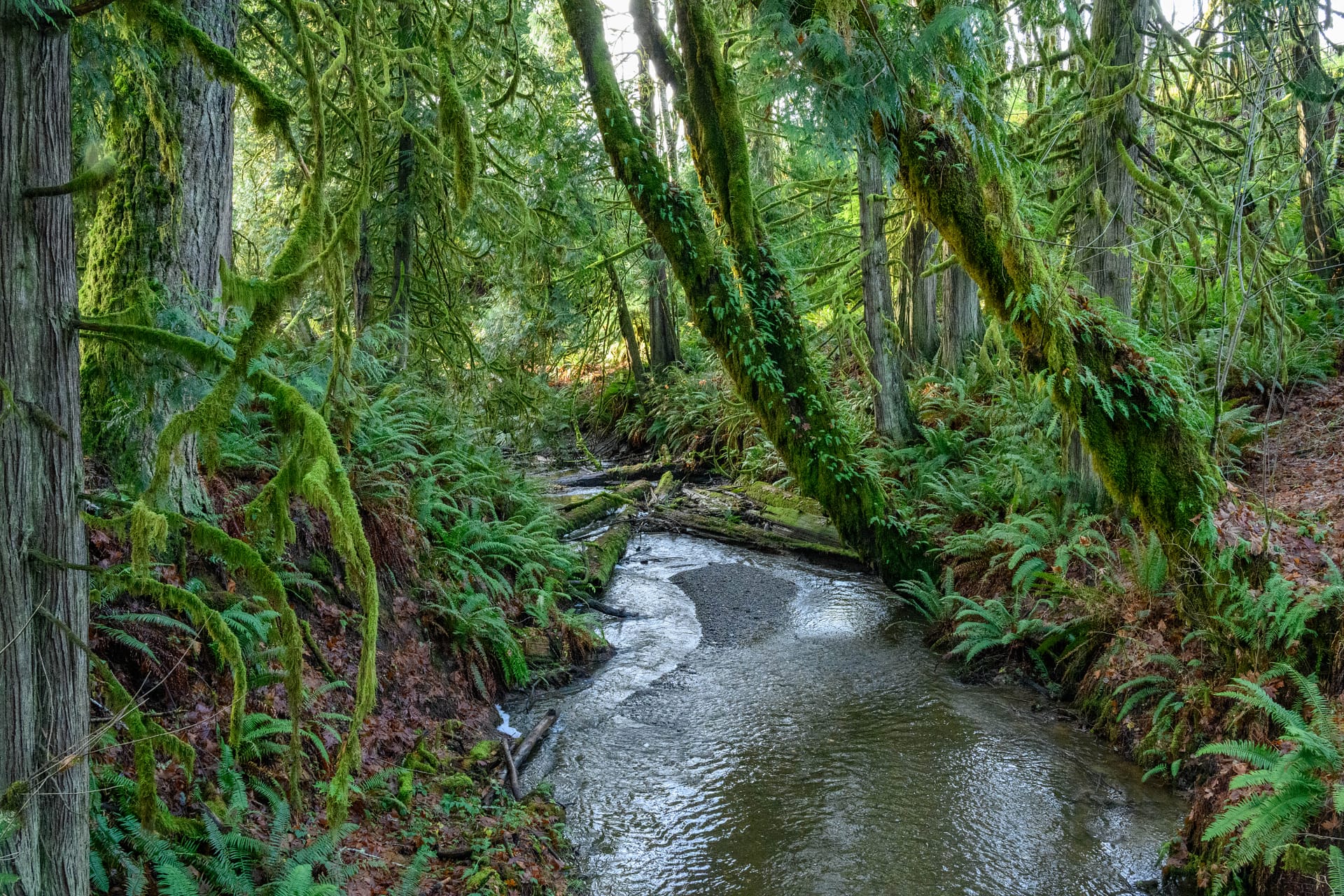
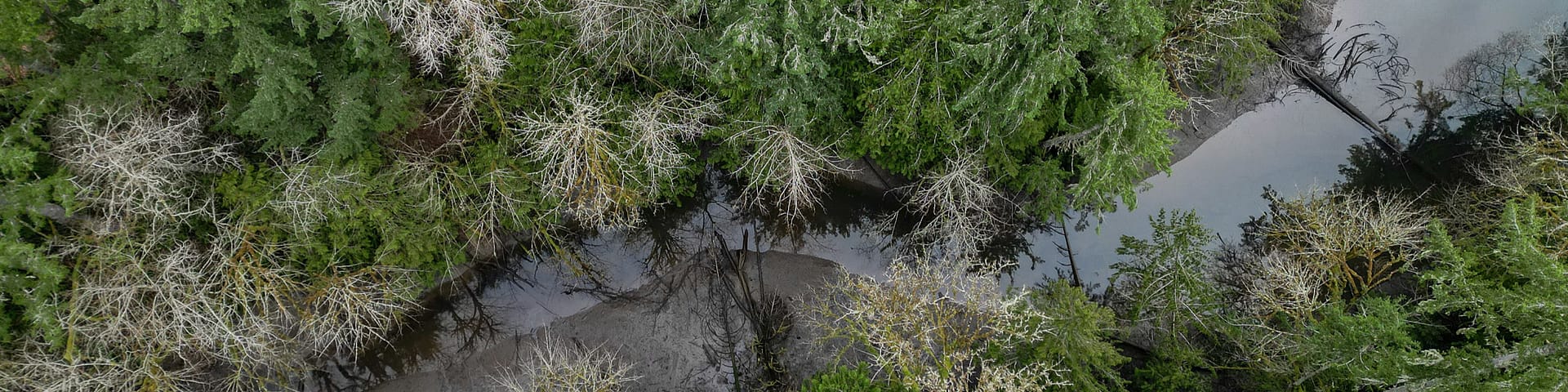
 Little Skookum Inlet Preserve permanently protects 1,900 feet of a freshwater stream and 3,200 feet of marine shoreline.
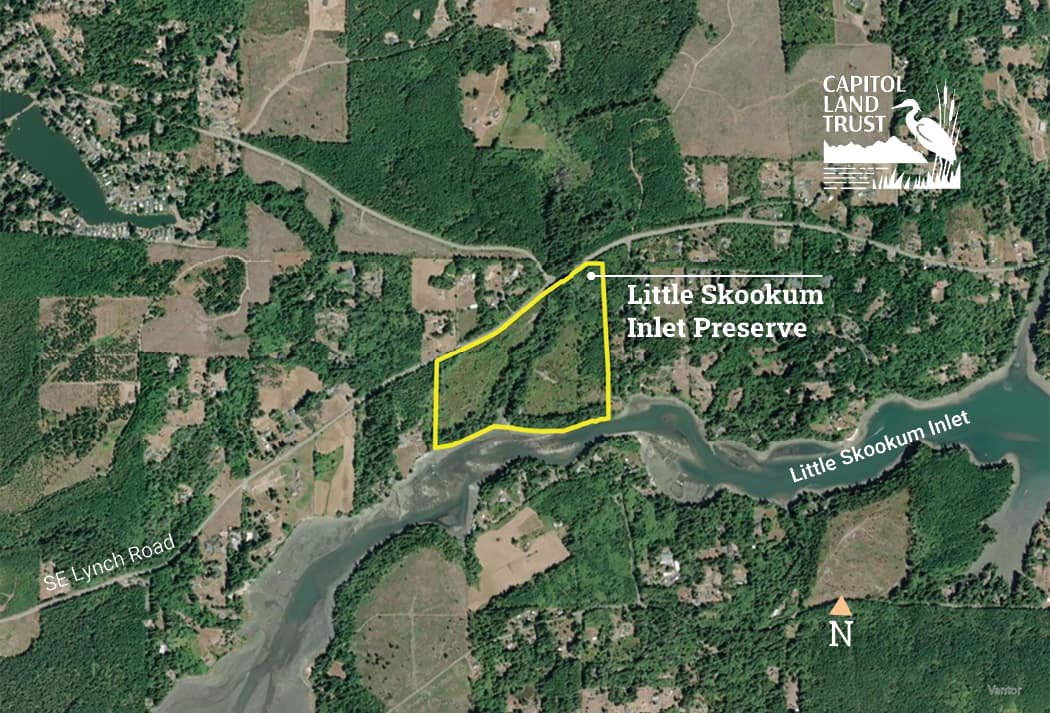
Thanks to generous partners and supporters, 66 acres of shoreline, forest, and wetlands on Little Skookum Inlet in Mason County—just east of Highway 101—are now permanently conserved. Our newest protected property, Little Skookum Inlet Preserve, brings long-term protection to an unusually rich mix of habitat types essential to the health of South Puget Sound.
Little Skookum Inlet is a narrow tidal waterway that connects the Skookum Creek estuary to Totten Inlet and the broader Puget Sound. Along its forested north shore, the preserve encompasses 3,200 feet of marine shoreline, 1,900 feet of fish-bearing stream, and 6.3 acres of freshwater and marine wetlands. These connected habitats support a wide range of species and natural processes.
-

- Please note this site is not open to public access.
A High-Priority Site for Salmon Recovery
The property is recognized as a high conservation priority for salmon in the Kennedy-Goldsborough Basin (Water Resource Inventory Area 14). Its stream hosts chum and coho salmon, along with coastal cutthroat trout. The inlet’s sheltered nearshore waters (the ribbon of seabed relatively close to shore) also support chum, coho, winter steelhead, and cutthroat trout as they move between streams in the Skookum Valley and Totten Inlet.
-

- An unnamed stream flows into Little Skookum Inlet through the new preserve, hosting a multitude of wildlife.

Pocket estuaries like this one are especially scarce—and vital. Research shows that juvenile Chinook salmon rely on pocket estuaries for feeding and shelter as they grow and head for deeper waters. These same shorelines likely support key forage fish such as surf smelt and Pacific herring, which many birds, mammals, and larger fish depend on.
“This acquisition project protects important habitat that supports Puget Sound salmon,” says Alexandra James, Conservation Director. “Pocket estuaries are rare in the South Sound. Preserving this one ensures that salmon and other species dependent on nearshore habitat have a place to thrive for generations.”
Diverse Forest and Wildlife Habitat
The preserve’s forests range from young stands to 80-year-old shoreline and streamside forests. Douglas-fir, western redcedar, western hemlock, red alder, bigleaf maple, and madrone make up the canopy, while an understory of ferns, salal, huckleberry, Oregon-grape, vine maple, and trailing blackberry grow underneath.
This blend of forest, shoreline, and wetland habitat draws a wide array of wildlife. Migratory waterfowl and shorebirds rely on the protected cove and estuary. The area also boasts important shellfish habitat, which in turn contributes to water quality. Land mammals such as deer, coyotes, and fox use the forested areas. Pollinators benefit from the native plants. And, bats have even been spotted underneath a bridge that crosses the creek.
Forested sections of the property were harvested in 2019, but have since been replanted with native conifer species, and the intact shoreline forest helps cool the water to support healthy fish habitat. Our long-term stewardship will help these younger forests mature into resilient, diverse habitats that support clean water, habitat connectivity, and diversity.
Stewardship Focused on Habitat Health
Initial stewardship activities include:
- Secure boundaries and prevent unauthorized vehicle access
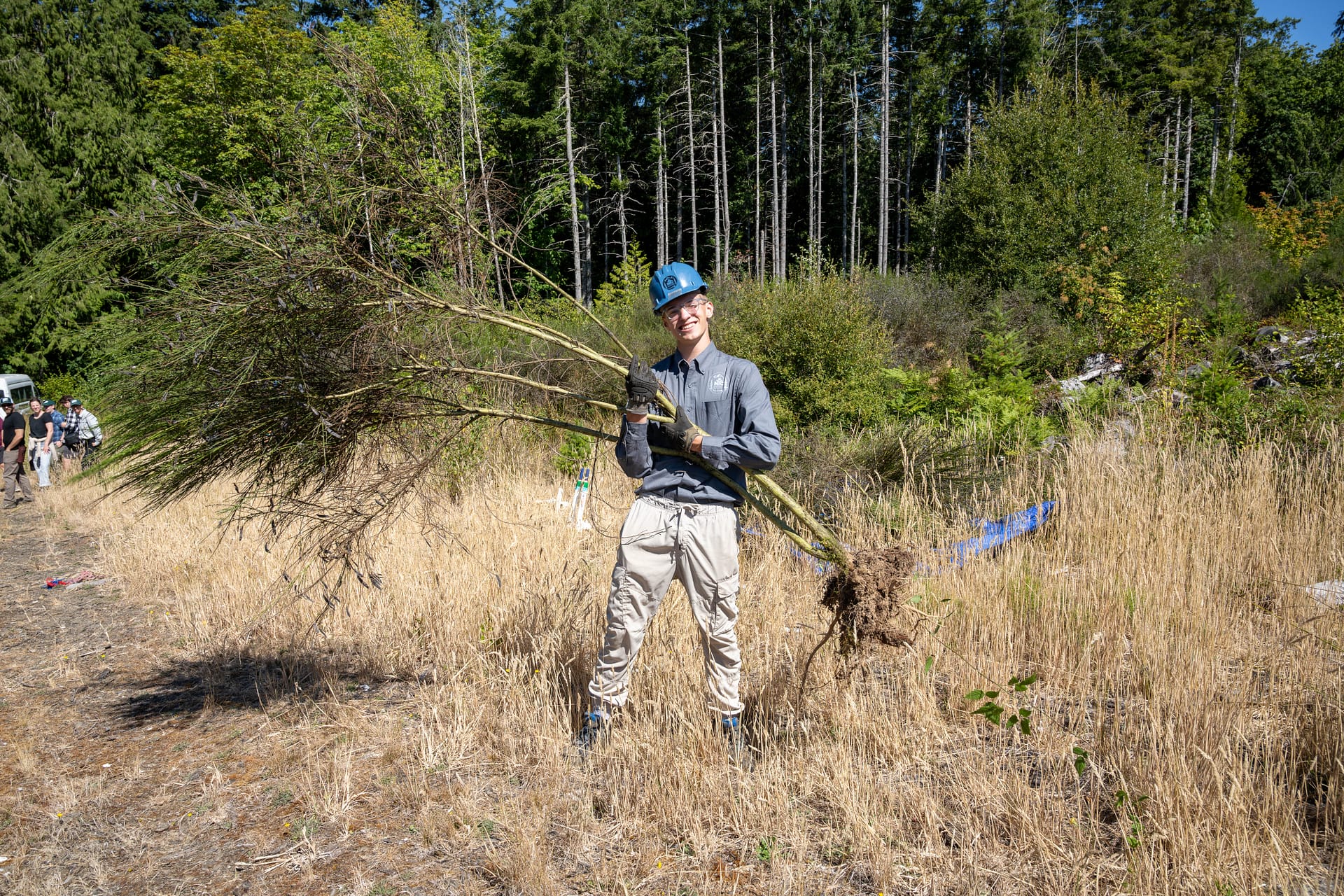
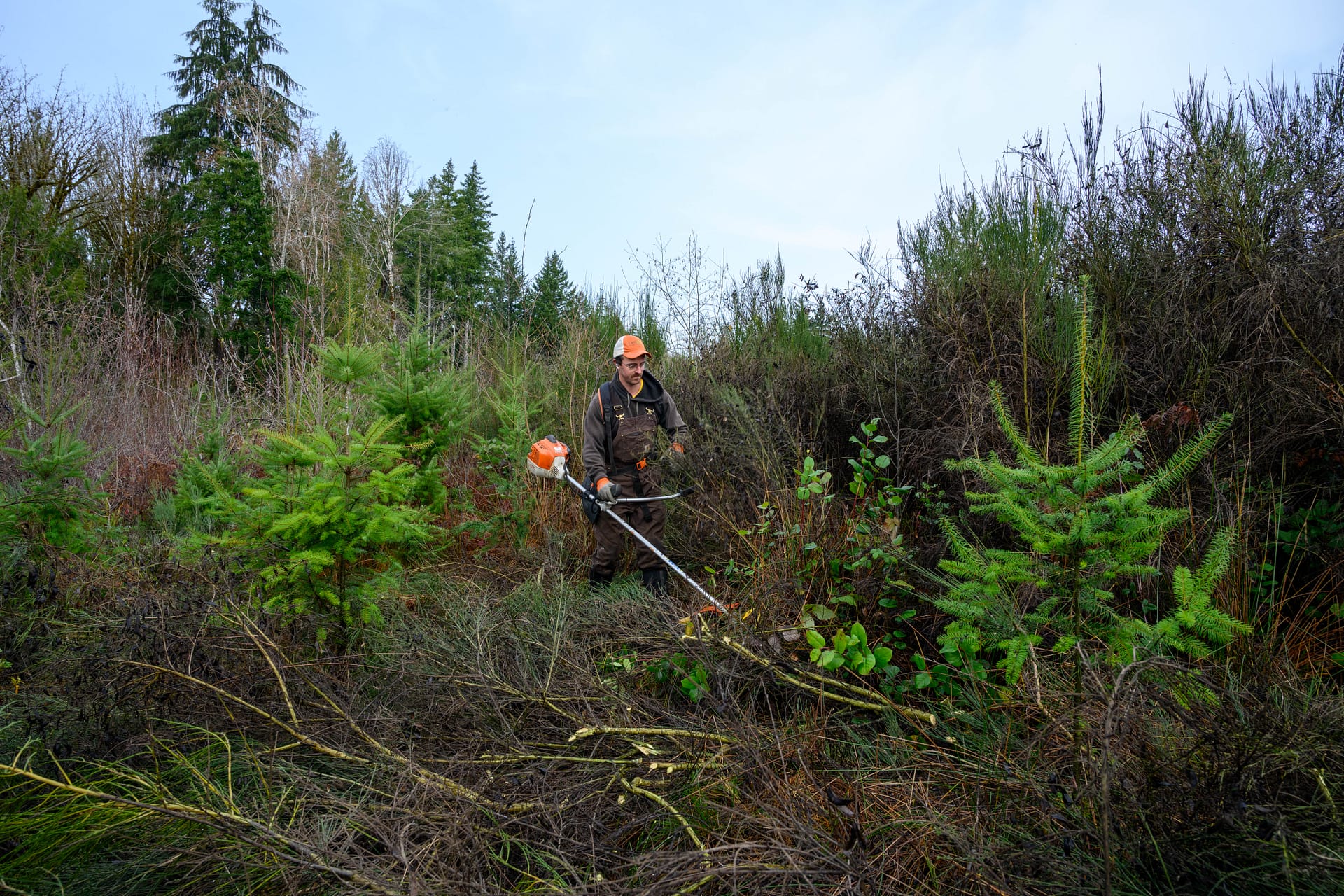
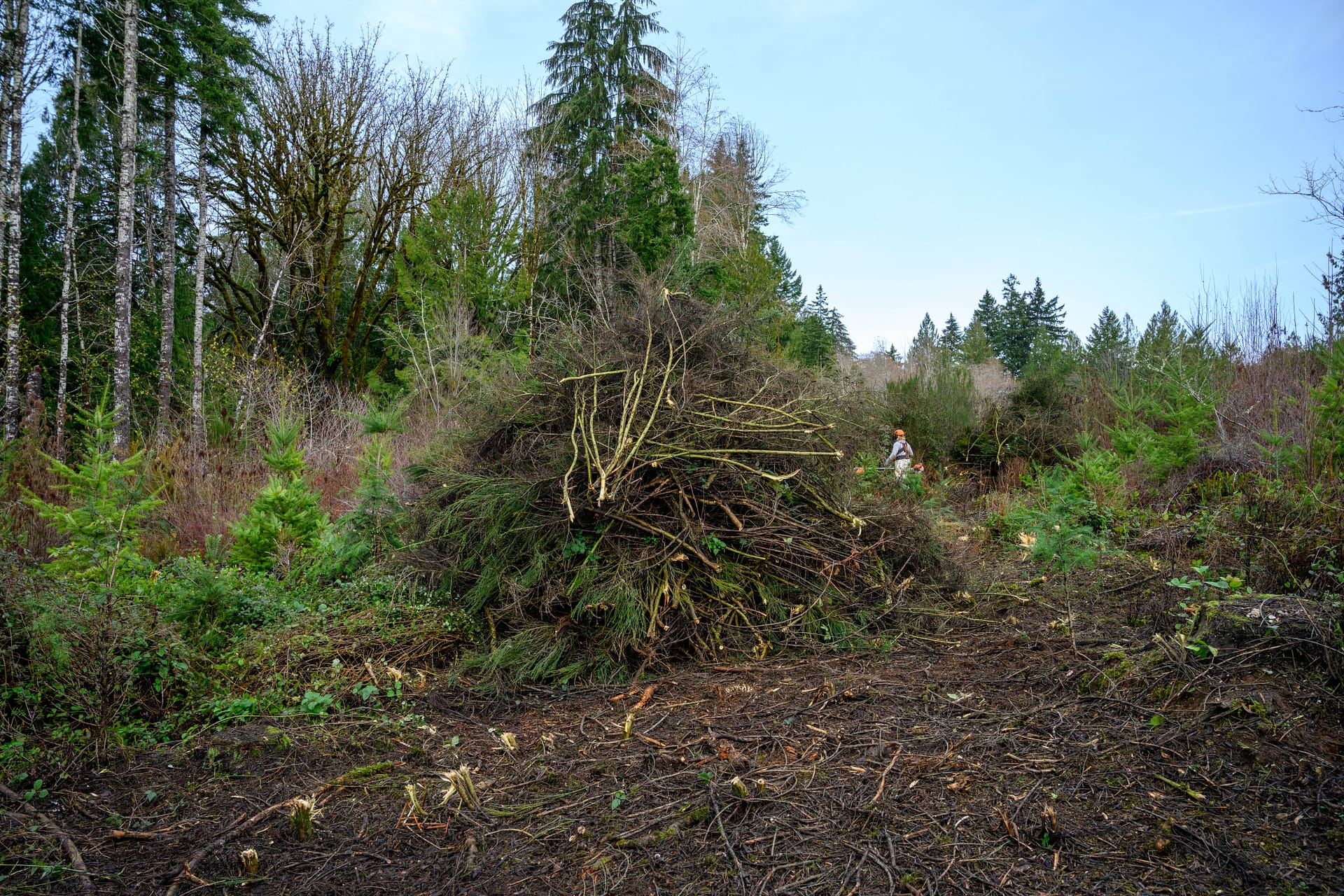
- Remove invasive vegetation and plant native vegetation
- Monitor forest health and address disease or damage
- Support the growth of a healthy, mixed-age forest through additional thinning and planting work
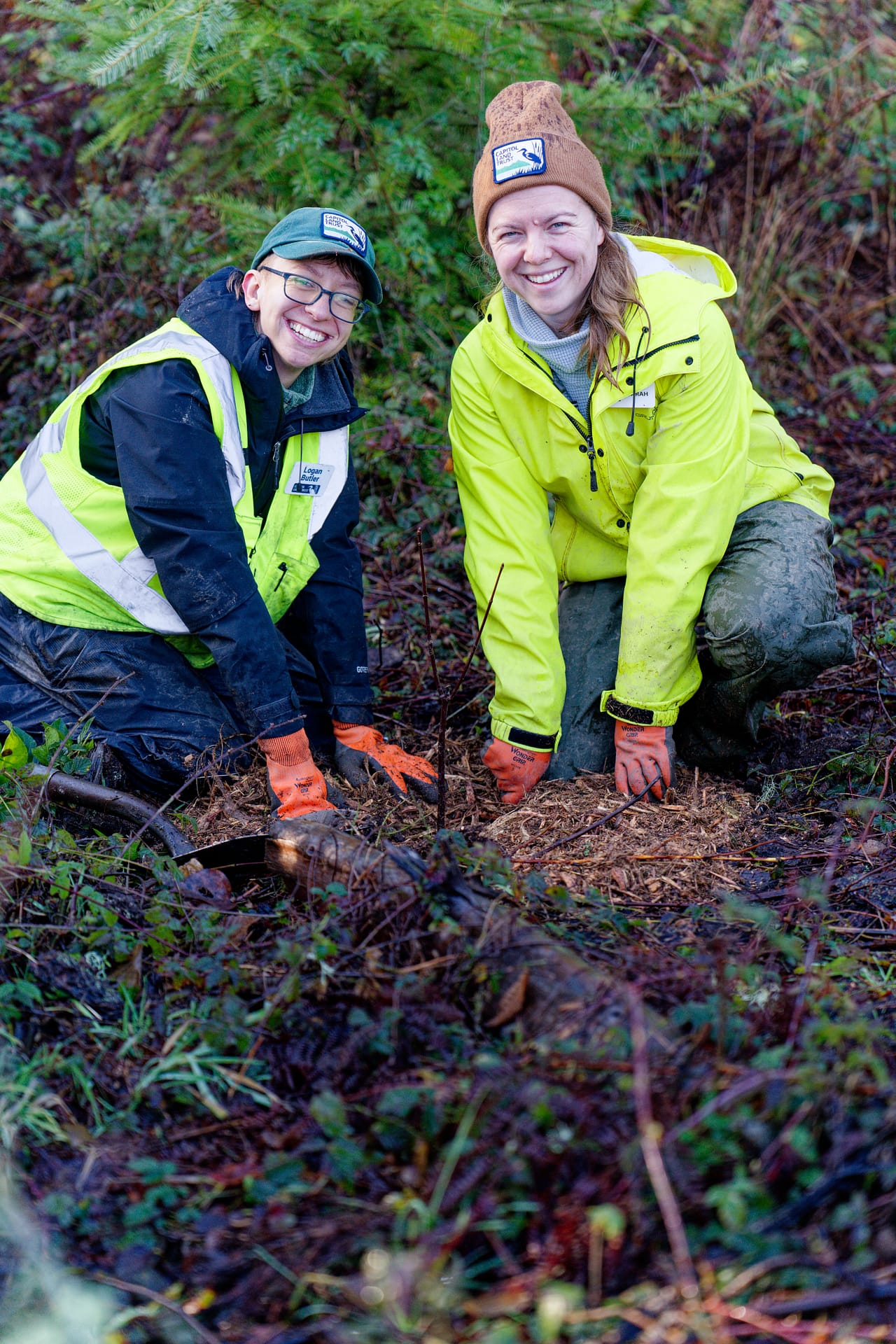
- Plant areas where infrastructure has been removed with native vegetation
-

- Northwest Youth Corps (left) and Sound Native Plants (right) remove scotch broom.
-
- Removing scotch broom allows the native forest to regrow.
-

- Staff and volunteers plant native species where a building was removed, Bruce Livingston.

Longer-term, we will steward the property so the forest develops characteristics of an older, more complex ecosystem such as large trees, layered vegetation, and natural habitat features that support birds, mammals, and clean water. All management will be guided by ecological benefit, not commercial harvest.
A Collaborative Conservation Effort
This acquisition was made possible through the willingness of the previous landowners to see the property protected, and with support from the Angela J. Bowen Conservancy Foundation.
While the preserve is not open to public access, its protection safeguards the natural land and water systems of Little Skookum Inlet, supporting wildlife, clean water, and the health of Puget Sound.
Help Conserve More Places Like This
Protecting marine shorelines, wetlands, forests, and salmon habitat is only possible through community support. Donate today to help conserve the lands and waters that keep South Puget Sound healthy and thriving.