
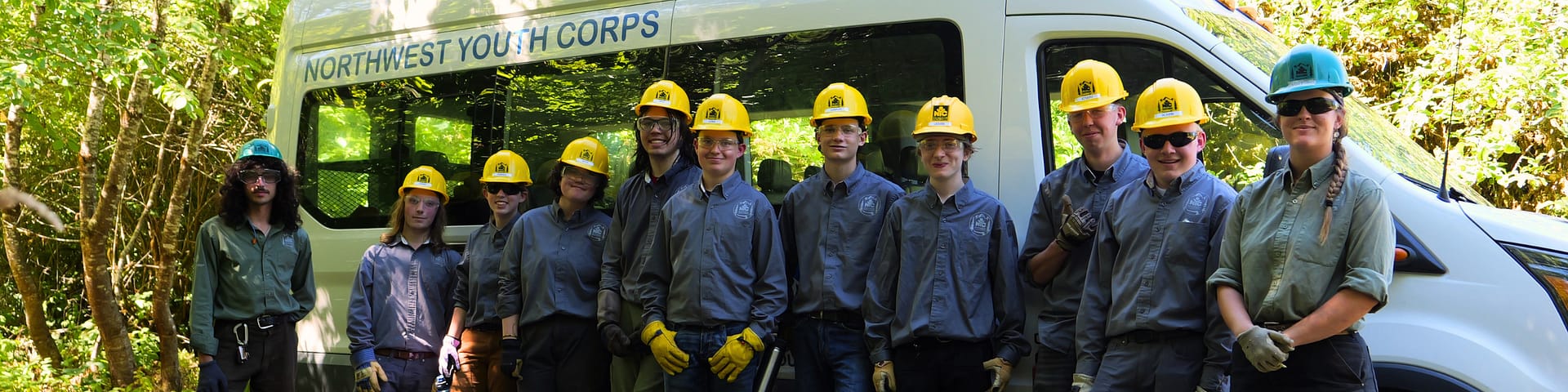
 This year's Northwest Youth Corps crew has helped restoration efforts at Bayshore Preserve, Inspiring Kids Preserve, Lower Eld Preserve, and Twin Rivers Ranch Preserve.
It’s a warm summer morning at Inspiring Kids Preserve, and dancing among the joyful chatter of songbirds is another happy sound. It’s the laughter of the Northwest Youth Corps (NYC) eleven-person crew as they try to remove fencing from the preserve’s lowland restoration area. But the fencing is giving them trouble.
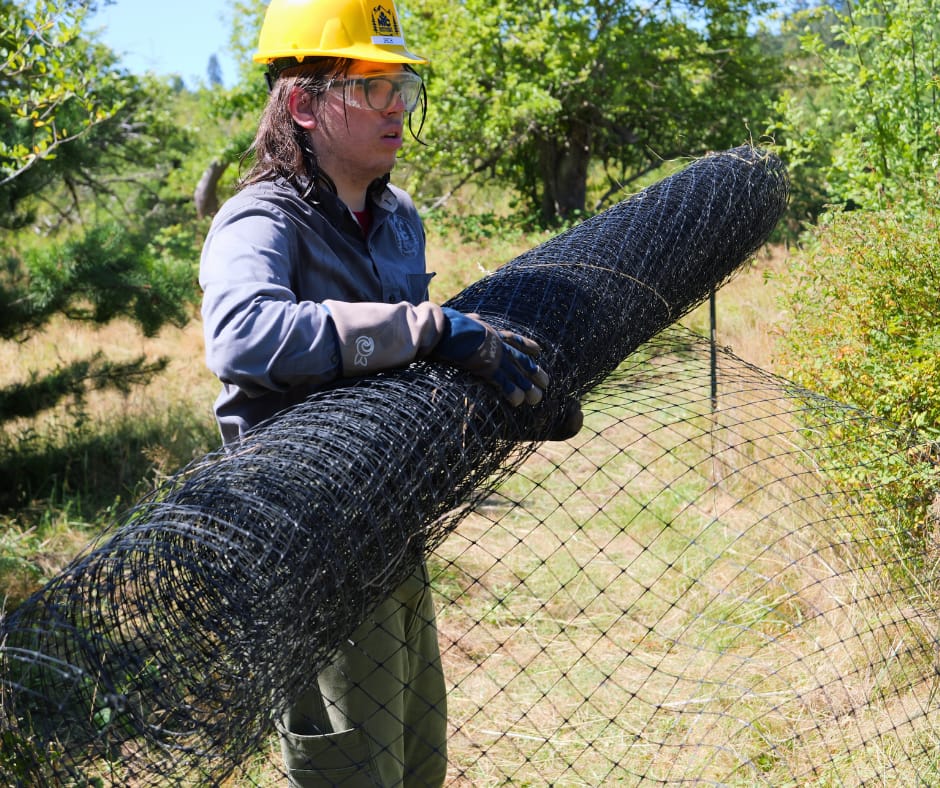
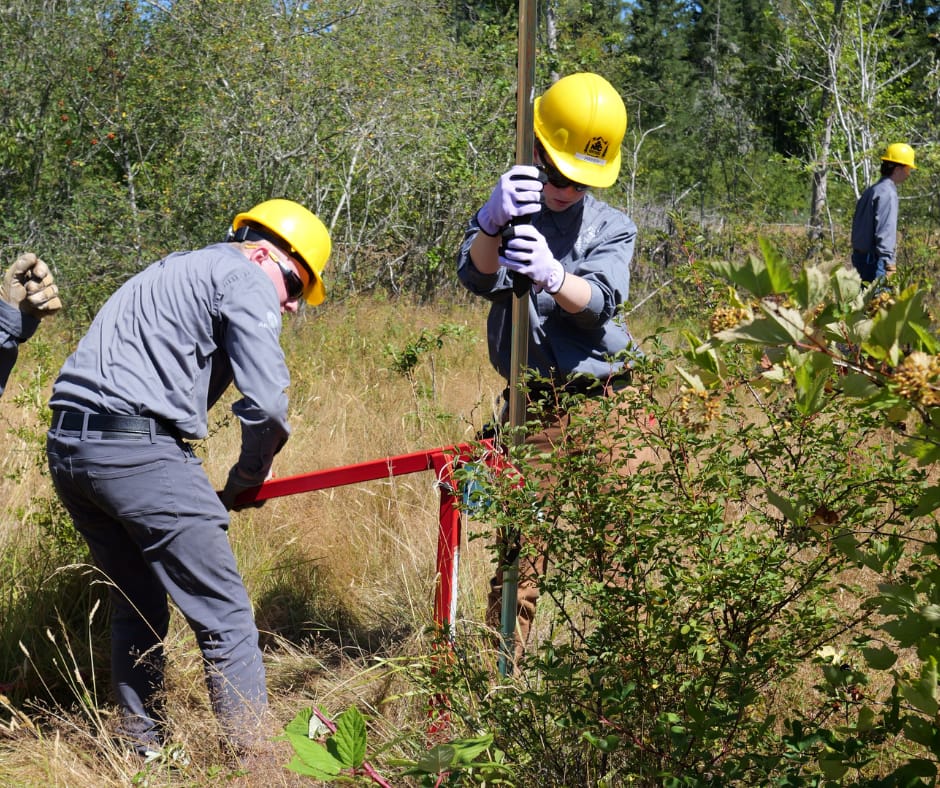
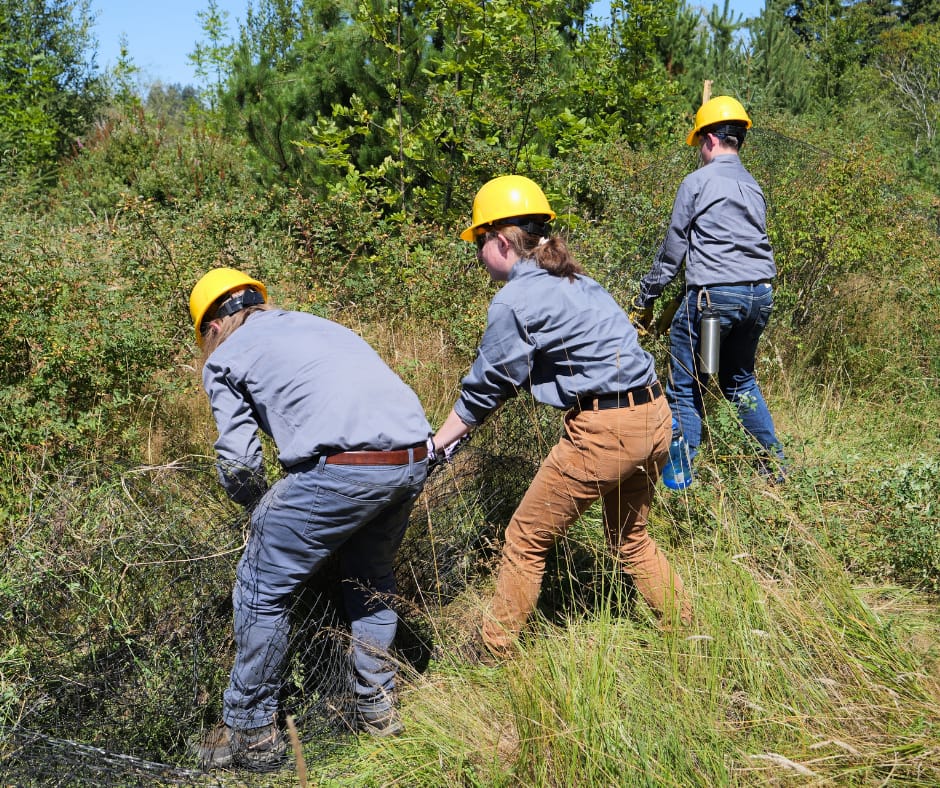
“I see how we’re gonna have to do this,” says Gianni as his eyes survey the scene. “We might have to get it through this tight area, to keep it loose and feed it through.” With that, his partners spring into action, tackling the unwieldy fencing and the stubborn t-posts that — until this moment — have held it in place.
Soon, another voice escapes the dense foliage. “Team, how are we doing?” Gabe inquires. “Can we roll it the rest of the way?”
Preparing for the Next Chapter in Inspiring Kids Preserve’s Restoration Journey
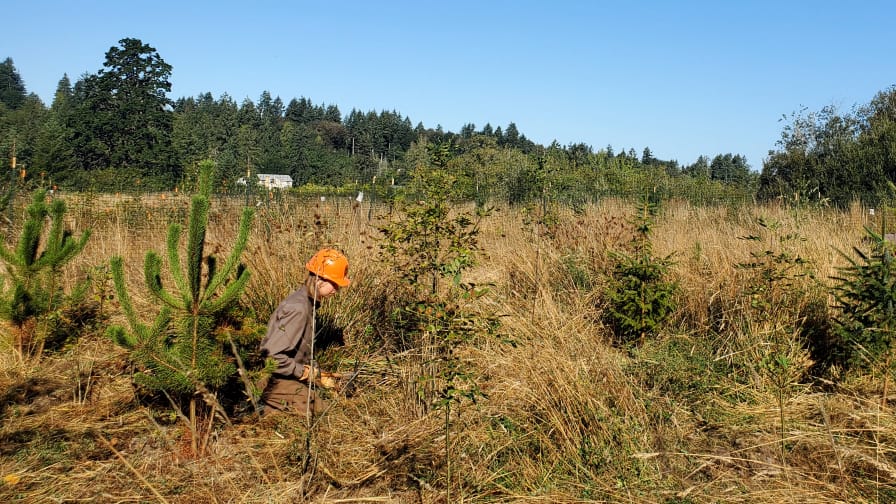
Up until now, the mesh fencing has been protecting native shrub and tree species like Nootka rose and Douglas fir from wildlife like deer who might eat or trample them. Many of these native plants were reintroduced several years ago by previous NYC crews. Today, the restored plants have found firm enough rooting that their protection by fencing is no longer necessary.
-

- Many of the native plants now thriving at Inspiring Kids Preserve were planted by previous years’ NYC crews, including this one from 2022.
Crew lead Hannah observes that this year’s group is larger than average. “More hands make light work,” she says. “But we’re also making sure those hands work well together.” This emphasis on teamwork is no accident, but rather an important component of NYC’s approach to working with youth on the land.
“It’s more than just conservation,” Hannah says. “Leadership development is equally important.”
As if on cue, self-described mom of the group Parker pipes up. “Do you need a water break?” she asks her fellow crewmates.
The Crew Tackles New Challenges at Bayshore Preserve
This exceptional combination of consideration for both the environment and each other is on full display a week later when the NYC crew has moved to Bayshore Preserve with a fresh mission to remove invasive plants that are encroaching on sensitive prairie habitat.
“I can get the piles for you if you want to just leave them here,” Jake offers upon noticing his comrades tiring from tackling the dense vegetation.
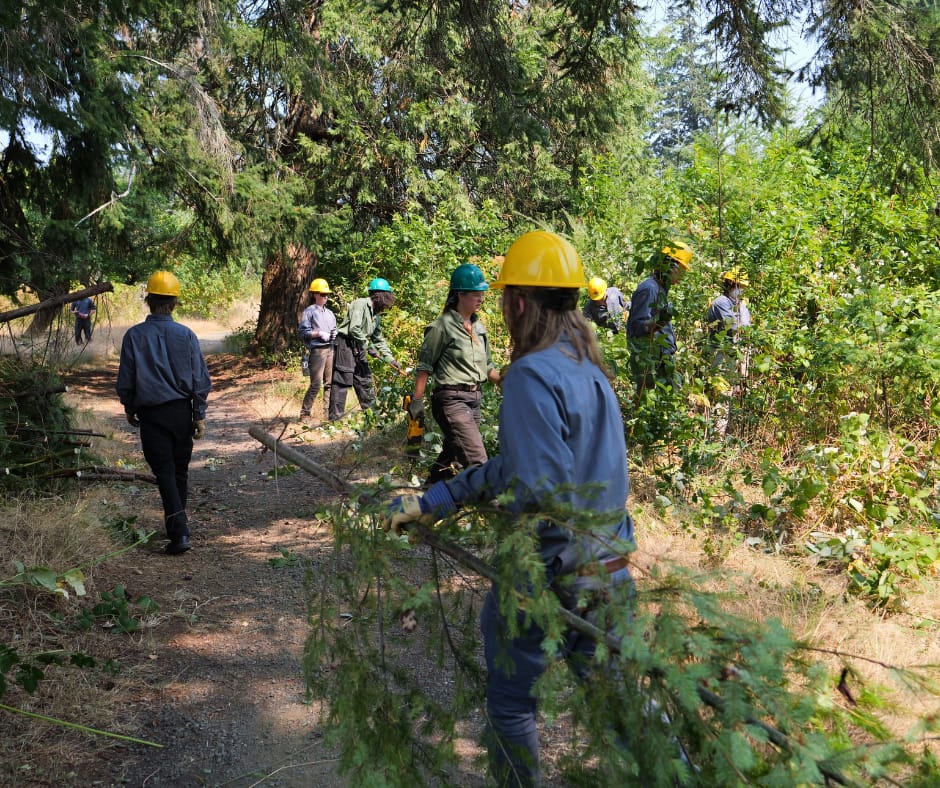
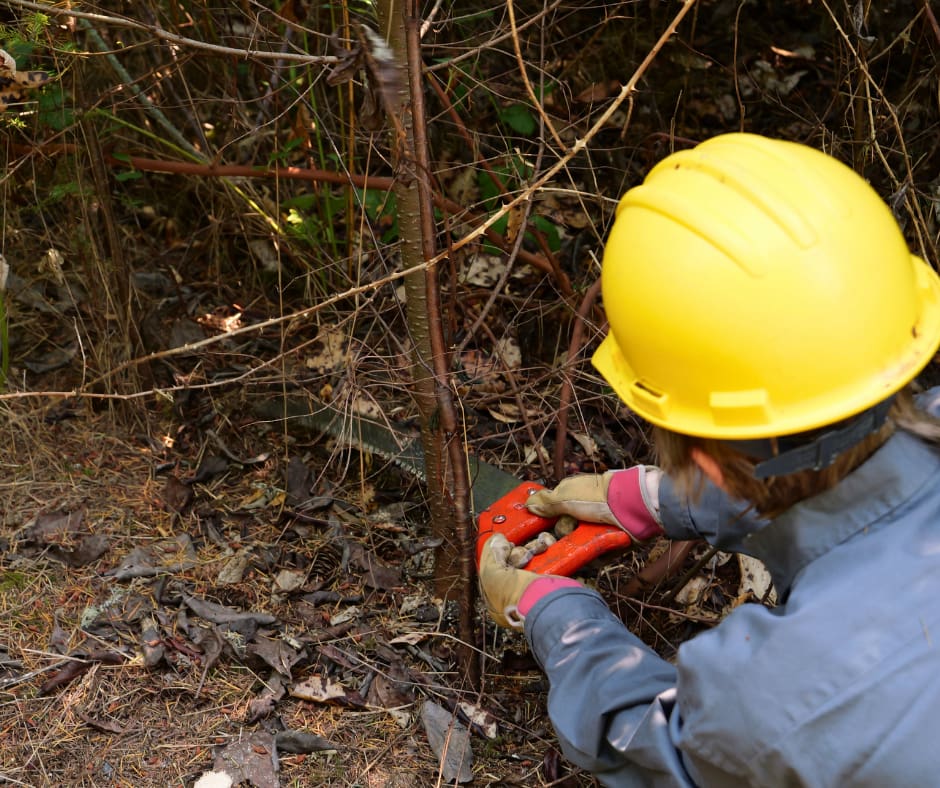
Deep within the saplings and blackberry vines, Hannah is providing a brief lesson on habitat restoration strategy. “We want to remove the Douglas firs more than the madrones,” she explains. “The firs come back so fast and the madrones are slower growing.”
This is a lesson about more than just trees, it is about the importance of adjusting one’s approach according to a site’s specific requirements. Unlike at Inspiring Kids Preserve, where the fast-growing Douglas firs have been an asset to replanting open spaces, here at Bayshore Preserve the ecological integrity of prairie habitat takes higher priority. This is due to the fact that in western Washington, just three percent of the region’s original native prairie habitat remains.
NYC’s mindful approach to both its environmental restoration work and cultivation of future conservation leaders is what draws passionate people like Hannah to the organization. “They genuinely care,” she says. “That’s why I love working here. It’s why I keep coming back.”