

 The Voice: June 2026
Washington is known for, and defined by, its natural wonders. In 2025 alone, more than 40 million visitors enjoyed our state parks — up from 33 million a decade earlier — and the gorgeous scenery of mountains, volcanos, coastline, and greenspaces.
Across South Puget Sound and Chehalis Basin watersheds, Capitol Land Trust works to conserve and protect this natural beauty. Thanks to their tireless work over the last 40 years, local land and waterfronts will remain for generations to come.
Keeping Washington Green, One Nature Preserve at a Time
Mary Kniestedt, the Trust’s Communications Manager, explains that their work “ranges across estuaries and shorelines to forests, wetlands, and working lands that support both people and wildlife and that these places are increasingly important to protect as the region grows and changes.”
She says that while many people equate Capitol Land Trust with their visitor-welcoming nature preserves, “much of our conservation work happens behind the scenes through habitat protection, restoration, and long-term stewardship across the region. To date, Capitol Land Trust has protected more than 6,700 acres and nearly 20 miles of marine shoreline across Thurston, Mason, Grays Harbor, and Lewis counties.”
What guests might not know, says Kniestedt, is that “our conservation work is forever. When Capitol Land Trust conserves a property, that land is permanently protected for future generations. Conserving land isn’t a temporary project or a short-term designation. It’s a long-term commitment to protecting habitat and the ecological systems that support healthy communities and biodiversity. Once land is conserved, we continue caring for it in perpetuity.”
Working Behind the Scenes on Habitat Restoration and Ecological Health
Kniestedt says that many of the lands they care for aren’t open to the public. These are properties managed to maximize habitat and ecological health.
But lately Capitol Land Trust has been intentionally investing in public access preserves which welcome visitors. “We believe that spending time in nature helps people build lasting relationships with the land,” says Kniestedt, “and those connections strengthen conservation over time. Programs like Second Saturdays at Bayshore and Salmon Experience help people deepen those relationships.”
Whether as simple as watching salmon return to a creek, hearing birds along the shoreline, or spending quiet time outdoors with family and friends, Capitol Land Trust hopes people fall in love with western Washington all over again.
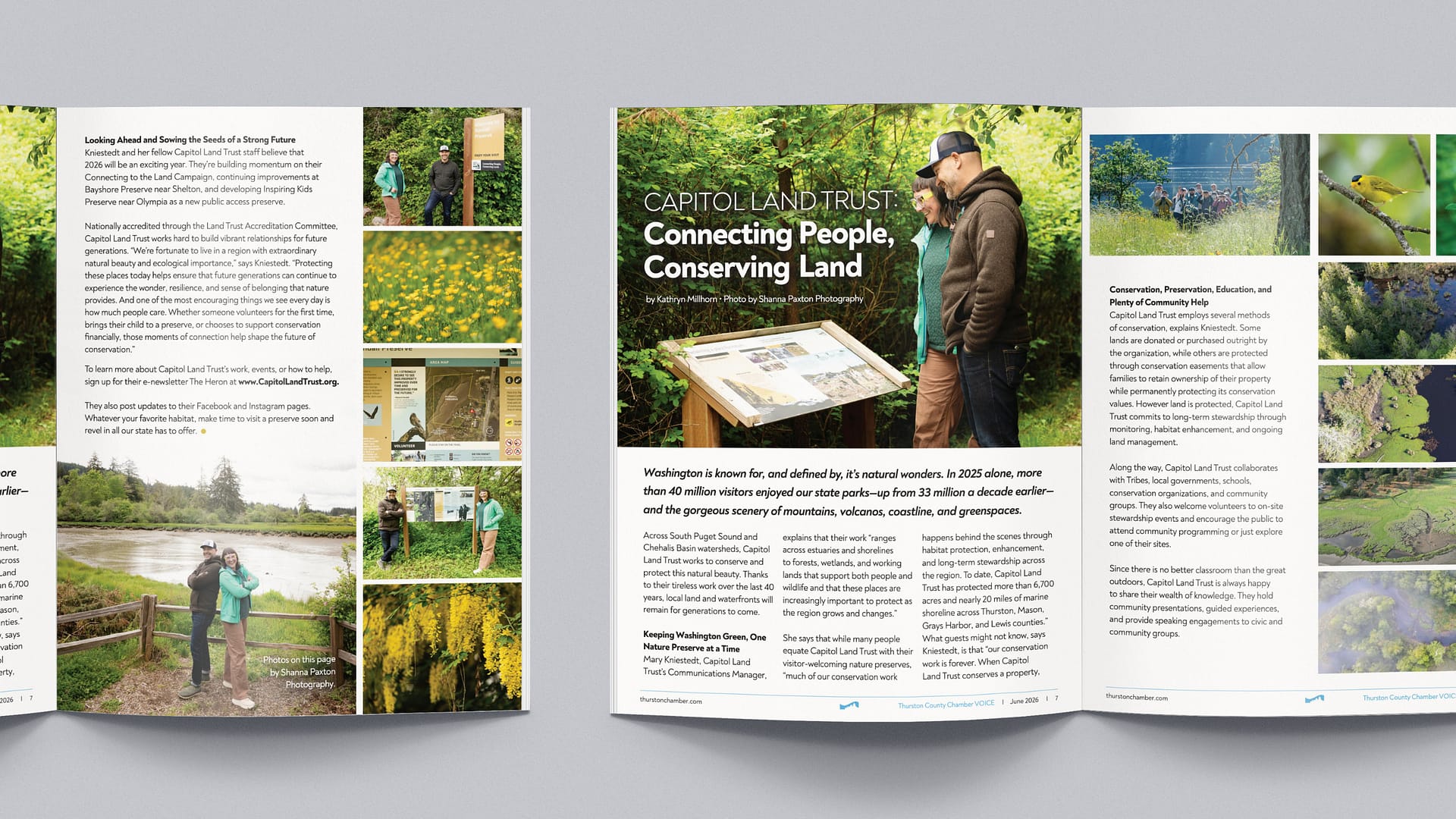
Conservation, Preservation, Education, and Plenty of Community Help
Capitol Land Trust employs several methods of conservation, explains Kniestedt. Their lands are donated, set aside as family-owned conservation easements, or purchased outright by Capitol Land Trust. However they’re acquired, Capitol Land Trust commits to long-term stewardship through restoration, monitoring, habitat enhancement, and ongoing land management.
Along the way, Capitol Land Trust collaborates with Tribes, local governments, schools, conservation organizations, and community groups. They also welcome volunteers to on-site stewardship events and encourage the public to attend community programming or just explore one of their sites.
Since there is no better classroom than the great outdoors, Capitol Land Trust is always happy to share their wealth of knowledge. They hold community presentations, guided experiences, and provide speaking engagements to civic and community groups.
Looking Ahead and Sowing the Seeds of a Strong Future
Kniestedt and her fellow Capitol Land Trust staff believe that 2026 will be an exciting year. They’re building momentum on their Connecting to the Land Campaign, continuing improvements at Bayshore Preserve near Shelton, and developing Inspiring Kids Preserve near Olympia as a new public access preserve.
Nationally accredited through the Land Trust Accreditation Committee, Capitol Land Trust works hard to build vibrant relationships for future generations. “We’re fortunate to live in a region with extraordinary natural beauty and ecological importance,” says Kniestedt. “Protecting these places today helps ensure that future generations can continue to experience the wonder, resilience, and sense of belonging that nature provides. And one of the most encouraging things we see every day is how much people care. Whether someone volunteers for the first time, brings their child to a preserve, or chooses to support conservation financially, those moments of connection help shape the future of conservation.”